Dj Shadow Signed By Universal? Stop Joshin'
Yes it's true. Josh Davis has signed with Universal. That track floating around the web is from his new album. Link
posted by G at 4/27/2006 04:03:00 PM
0 comments

generally contemporary rap
posted by G at 4/27/2006 04:03:00 PM
0 comments
 NYTimes article discusses a resurgence of graf on the subway trains. Some people might argue the amount of graf that exists nowadays has been fairly consistent for many years. The recent difference appears to be the use of etching acid, mixed with shoe polish, which is more destructive than the washable polish on its own. Link
posted by G at 4/25/2006 10:38:00 AM
0 comments
posted by G at 4/24/2006 01:38:00 PM
0 comments
posted by G at 4/24/2006 12:30:00 PM
0 comments
posted by G at 4/24/2006 11:28:00 AM
0 comments
AllHipHop.com: Do you have any regrets about the Sugar Hill experience? Wonder Mike: One time, we came out and surprised Busta Rhymes while he was on the Vibe show. We came out while he was doing an interview and he gave us a hug with tears coming out of his eyes. The next thing I knew, Sugar Hill was suing him for using Hank’s lyrics for “Whoo-Hah! Got You All In Check.” Come on, man, that’s just dumb. The same thing happened backstage at the second VH1 Hip-Hop Honors Awards with the Beastie Boys. They were jumping around like little kids, excited and happy to see us. Then, here came Sugar Hill again, suing them a few weeks later for something else that they used. All that happy, teenage, horses**t I used to say in the past about Sugar Hill [Records] is out the window. I will never go back to them. It will be all good once people know that we’re not with those clowns anymore.
posted by G at 4/24/2006 09:57:00 AM
0 comments
 Over at wikipedia someone spent a lot of time trying to define Alternative HipHop. As you would expect there is disagreement. In my opinion, attempts to define genres of music tend to lead to misconceptions and fake boundaries. Call it what you want, as long as you are trying to gain understanding of the drive and the meaning behind the music, not so you can call people out or profess your judgements. Link
posted by G at 4/20/2006 09:11:00 PM
0 comments
It arose from the streets of the Bronx and Spanish Harlem, Miami taking it up with gusto soon after. "Life was more funky in New York for this new sound coming out," remembers hip-hop progenitor and adamant freestyle supporter DJ Afrika Bambaataa, whose own Soul Sonic Force–era sound laid the genre's sonic foundation. "Its roots are electro-funk and hip-hop," he says, crediting Lisa Lisa & Cult Jam with setting it off. Latinos, though, had made their mark in hip-hop from the beginning: Cold Crush Brothers DJ Charlie Chase, Fantastic Five's Ruby Dee and Whipper Whip, and Fearless Four's Devastating Tito and DJ Master O.C., for starters. Interestingly, despite a decidedly hip-hop foundation, freestyle emerged at a time when—some say because—New York Puerto Ricans and other Latinos, following breakdance overkill in the media, suddenly found themselves ostracized from the culture they helped create. "It was ours," says Bronx-bred George Lamond, a former B-boy and graffiti writer who became one of freestyle's most popular, enduring artists, "and yet, at one point, suddenly it wasn't ours anymore." The scene began to segregate, with even Latin Quarter (where shared freestyle and rap bills, say Leather and Lace and Cutmaster DC, were once the norm) ironically recast as a black club. Suburban rap groups like Public Enemy stormed the once integrated scene, proclaiming it "a black thing" (read: African American)—and no, Latinos didn't understand. Performer K7, who co-founded freestyle's first male supergroup, TKA, says, "Our way to do hip-hop became, 'Let's take those same breaks and beats, the hardness of, say, a Rakim track,' and since we weren't being embraced as rappers, we sang." In 1986, their Tommy Boy Records breakout hit "One Way Love" became a top request on black radio powerhouse 98.7 Kiss FM, and the guys hoped their acceptance would reinforce Latinos' hip-hop profile. They were sadly mistaken.
posted by G at 4/18/2006 08:50:00 PM
1 comments
posted by G at 4/18/2006 05:50:00 PM
1 comments
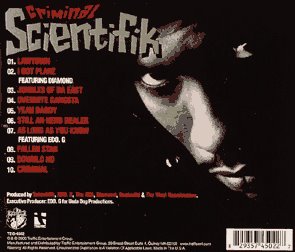 In case you're not in the know, the good people over at Traffic Entertainment have been dropping CD reissues like crazy. This is especially nice for hard to get, out of print, vinyl only releases. Peep the Rza produced "As Long As You Know", from Scientifik's slept on album. You can stream snippets of the entire album here. trafficent.com
posted by G at 4/17/2006 10:11:00 PM
0 comments
 According to their site, GRL is "dedicated to outfitting graffiti artists with open source technologies for urban communication." They "bombed" the Cube by Astor place with LEDs. I wonder if they're working on a way to "communicate" via subway trains. Interesting. Link
posted by G at 4/10/2006 12:15:00 PM
0 comments
 NYU's Fest Forward: HipHop Unbound festival goes on until April 15th. Tickets are kind of steep but there might be discounts for students. Honestly, doesn't look all that interesting, but what do I know? Anyone remember the old Project5/Zulu Nation Essence shows at NYU? Link
Mon, April 3 7:00P.M. The Making of 'Planet Rock' Retrospective Tue, April 4 7:00P.M. Beyond Basic: Human Beatbox Workshop Wed, April 5 7:00P.M. Decadancetheatre + Full Circle Performance Thu, April 6 3:00P.M. Beyond Basic: Popping & Locking Workshop Thu, April 6 7:00P.M. The Great Hip-Hop Swindle Performance Fri, April 7 7:00P.M. Decadancetheatre + Full Circle Performance Sat, April 8 2:00P.M. Beyond Basic: Turntablism Workshop Sat, April 8 7:00P.M. The Future of Hip-Hop Retrospective Mon, April 10 7:00P.M. Executive Decisions: 30 Years of Powerful Women in Hip-Hop Retrospective Tue, April 11 7:00P.M. Ameriville Performance Wed, April 12 3:00P.M. Beyond Basic: Art of Rhyme/Spoken Word Workshop Thu, April 13 7:00P.M. Deep*NYC Performance Sat, April 15 10:00P.M. The Coup Performance
posted by G at 4/06/2006 10:52:00 AM
0 comments
posted by G at 4/04/2006 10:15:00 PM
0 comments
The Democracy and Hip-Hop Project was established for the study and investigation of the practical, historical, economic, and political implications of hip-hop music and culture. It was founded in 2003.I urge you to read some of his writings, not so much because I agree with all of his opinions but because, as is rarely the case, he discusses aspects of hip-hop culture which rarely get touched upon by the majority of popular media outlets. democracyandhiphop.blogspot.com
Excerpt from David Drake's The Death of Hip-Hop: ...he considers hip-hop as an ensemble of contrasting ideas and influences. While refusing to fashionably reduce hip-hop to bombastic, reactionary or puritan rhetoric, he situates hip-hop, not as something static or even linear, but as a democratic and participatory organism; as something alive which is authored by people and which perpetually undergoes change. Thus, he endeavors to break from hip-hop’s narrow definitions with a revolutionary view emancipating it from the claws of conventional understanding.
Excerpt from Jack The Rapper: Inconveniently enough, there is no one person we can isolate from society and hold up as the architect of patriarchy. Every individual, from birth onward, enter into relations which are patriarchal, whether we are on the dominating or the subordinate side of the coin. Oftentimes we say that people simply perpetuate sexism, whether they are the cause of it or not. This is partially true. Yet sexism is perpetuated daily, whether we actively participate or not. Who takes the blame for this social construct? Young, black, male, rappers, of course. It is true. Black men in general have been the scapegoats whom society pushes off its ugliest of ills: violence, poverty, crime, etc.; all have found black men at the center of these social phenomenon. And because hip-hop has always been the creative medium for many young, black men, it takes on a more acute guilt.
posted by G at 4/04/2006 09:31:00 PM
1 comments
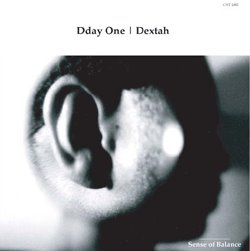 Dday One and Dextah are two very talented producers that decided to collaborate for a limited release. Samplist has samples of tracks, from their new Split 7inch, available for your listening pleasure (Dextah's Untitled track was also featured on our Audiocast - No. 021106 - which happens to still be available for download). 500 copies of the record are for sale via samplist.com/content.
posted by G at 4/03/2006 08:33:00 PM
0 comments
